
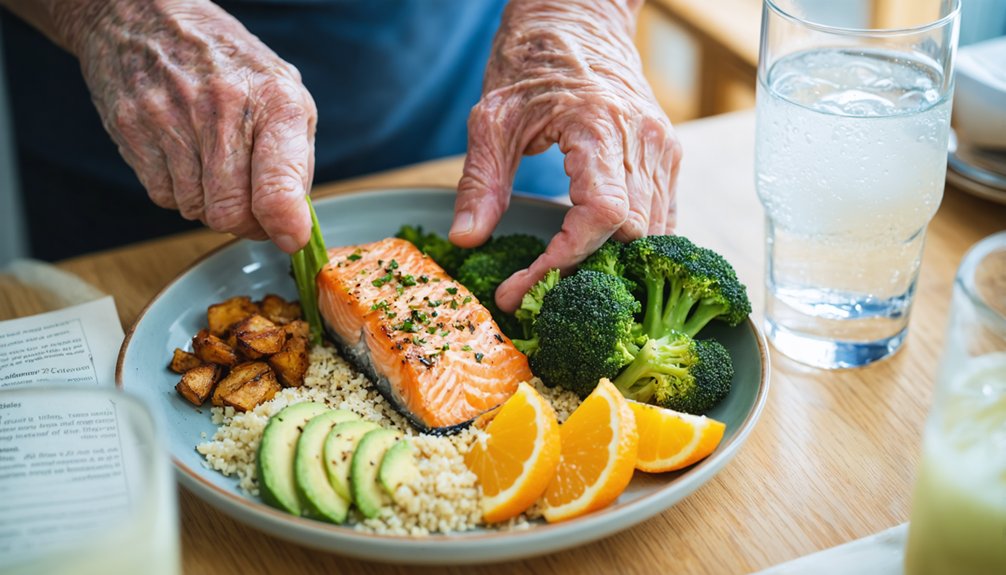

As you age, digestion, absorption, muscle response, and medication effects change, so you need smarter, nutrient‑dense choices to stay strong and healthy. You absorb less B12, vitamin D, and calcium, your muscles resist protein’s signals, and your microbiome shifts—raising risks for weakness, fractures, and chronic disease. Prioritizing protein across meals, vitamin D/B12, fiber, hydration, and whole‑food patterns like Mediterranean/DASH cuts risk and preserves function. Keep going to learn practical meal, supplement, and exercise tips.
Key Takeaways
- Aging reduces digestion and nutrient absorption (especially B12, vitamin D, calcium), so balanced diets and supplements prevent deficiencies.
- Higher protein needs and meal timing counter anabolic resistance to preserve muscle mass and function.
- Plant‑forward patterns (Mediterranean/DASH) lower chronic disease and support cognition through anti‑inflammatory nutrients.
- Adequate hydration, fiber, potassium, magnesium, and healthy fats maintain cardiovascular, gut, and metabolic health.
- Medication‑nutrition interactions and microbiome shifts make personalized review and food‑first planning important.
How Aging Changes Nutrient Absorption and Metabolism
Because your digestive system changes as you age, your body won’t extract nutrients the way it used to. You’ll often face gastric hypochlorhydria and reduced enzyme output, lowering B12, iron, zinc and protein breakdown and uptake. These shifts begin as early as your 40s and become common by 65, when hypochlorhydria affects up to 30% of adults. Intestinal responses to vitamin D fall, and calcium absorption drops, raising fracture risk. Slower motility, thinner mucosa and reduced blood flow further limit transfer of nutrients. Parallel microbiome shifts—loss of diversity and fewer short-chain fatty acids—impair B vitamin production and fermentation-based nutrient availability. Knowing these mechanisms helps you and your community adjust diet, medications and screening to protect nutrient status. Adding small amounts of healthy fats to meals can improve uptake of fat-soluble vitamins fat absorption. Regular physical activity also supports digestion and nutrient utilization maintains gut motility. Also, many older adults take multiple medications that can alter nutrient levels, so it’s important to review prescriptions with a clinician to manage medication-nutrition interactions.
The Growing Importance of Protein for Muscle Preservation
As you age, preserving muscle hinges increasingly on meeting higher protein needs—typically 1.2–1.5 g/kg/day versus the standard 0.8 g/kg—because older muscles show anabolic resistance and lose mass at about 0.3–0.8% annually after 30.
You should aim for moderately high protein to stimulate mTOR signaling, support amino-acid–driven synthesis (especially leucine), and reduce degradation pathways.
Pairing protein with resistance exercise amplifies gains and restores muscle sensitivity.
Practical steps include spreading intake across meals (meal timing) to maximize synthesis and combining animal and plant proteins to ensure quality and variety.
If appetite or dental issues limit intake, focus on protein-dense choices, fortified options, or supplements within a supportive community or care team to secure strength and independence.
Higher protein also helps reduce fat accumulation and improves metabolic health through improved insulin sensitivity reduced visceral fat.
Including higher dietary protein earlier in life may provide cumulative benefits for preserving muscle mass and function, and this is supported by evidence that muscle predicts longevity.
Key Vitamins and Minerals Seniors Often Need More Of
Nutrition matters more than ever with age, and certain vitamins and minerals often need topping up to preserve bone, nerve, immune, and metabolic health.
You should watch Vitamin D closely—health authorities recommend higher daily amounts for adults 71+ and advise supplementation when sun exposure is limited, since D enables proper Calcium intake and bone strength.
B12 absorption drops with age as stomach acid falls, so monitor levels to protect nerves and energy; dietary sources help but supplements may be needed.
Magnesium balance matters too: most older adults fall short, yet magnesium supports muscle, nerve, sleep, and blood sugar control.
These nutrients (D, B12, calcium, magnesium) are consistently flagged for seniors; discuss testing and tailored supplementation with your clinician.
Many older adults also benefit from eating whole foods to ensure fiber, antioxidants, and a broader nutrient profile than supplements alone. Adding a focus on B12 monitoring is especially important because absorption commonly decreases with age.
Nutrition Strategies to Reduce Chronic Disease Risk
When you follow evidence-based eating patterns—like Mediterranean, DASH, or AHEI—you markedly cut your chronic disease risk and preserve physical and cognitive function into later life.
You should prioritize plant-forward swaps—more fruits, vegetables, whole grains, legumes, nuts—with moderate lean animal foods to lower disease incidence by about 25% and support muscle via targeted protein from fish and legumes.
Limit ultra-processed foods, added sugars, and sodium to reduce hypertension, diabetes progression, and mortality.
Emphasize unsaturated fats and omega‑3s to lower inflammation and cardiovascular events.
Use smaller, regular meals, consistent timing, hydration, and social meals to boost adherence.
Consider fermentation benefits like improved gut health and nutrient bioavailability.
These practical, evidence-led steps help you age with resilience and belonging. Incorporating consistent, nutrient-dense meals is especially important because nearly 1 in 4 older adults are malnourished or at risk, which can undermine these benefits.
Managing Weight and Metabolism as Activity Levels Decline
Although your appetite and routines might stay the same, your metabolism and body composition quietly shift with age, so managing weight requires deliberate, evidence-based adjustments.
You’ll face gradual metabolic declines—about 0.7% yearly after 60 and muscle loss starting around 40—so small caloric mismatches add up.
Prioritize preserving lean mass with resistance exercise and consider activity substitution to replace sedentary time with purposeful movement; activity-related energy expenditure matters.
Use portion control to align intake with reduced resting energy needs; by age 90 daily needs can be ~26% lower than midlife.
Remember cellular metabolism slows independently of exercise, so combine strength work, regular movement, and measured portions.
You’re not alone—these are common shifts and manageable with steady, informed choices.
Dietary Patterns That Support Cognitive Health and Longevity
If you want to protect your thinking as you age, follow dietary patterns shown to preserve cognition and support longevity. You’ll benefit most from Mediterranean adherence and other plant-forward patterns that consistently link with better cognitive scores and lower impairment risk. Large reviews and cohorts report 22–65% greater odds of intact cognition with highest versus lowest adherence; strict Mediterranean-style eating associates with higher MMSE scores.
Plant-forward patterns rich in fruits, vegetables, whole grains, nuts, legumes, and unsaturated fats show dose-dependent protection; vegetable-and-mushroom patterns cut impairment odds by ~42%. Shifting from unhealthy to healthy patterns slows cognitive decline over time, especially for older adults, women, and vulnerable groups. Aim for evidence-backed, community-minded eating that’s flexible, real-food focused, and sustainable.
Practical Meal Planning for Better Nutrient Density
Because shifting to nutrient-dense meals makes every calorie count, plan plates that prioritize protein, fiber, and key micronutrients while matching your appetite and abilities.
Use meal prep to batch lean proteins (fish, poultry, legumes), whole grains, and colorful vegetables so you’ll reach B12, vitamin D, calcium, potassium, and fiber targets without extra effort.
Choose softer textures or pre-cut produce if chewing’s harder, and start meals with vegetables to boost fiber and satiety.
Practice portion control to align lower energy needs with higher nutrient needs—smaller, frequent meals can help.
Cook by baking, steaming, or grilling, swap salt for herbs, and include water-rich foods for hydration.
Mix social meals and budget-friendly seasonal items to make this sustainable and satisfying.
Supplements, Fortified Foods, and When to Seek Professional Guidance
Good meal planning and nutrient-dense plates cut a lot of risk, but supplements and fortified foods can fill gaps that food alone may not—especially for older adults with higher protein needs, reduced B12 and vitamin D absorption, or chewing and appetite barriers. You should view supplements as targeted tools: protein or creatine (≥5 g/day) and BCAAs (4–12 g/day) support strength and sarcopenia prevention, while vitamin D and B12 address age-related absorption declines.
Use fortified snacks and low-volume oral nutritional supplements to boost intake when meals fall short. Mind supplement timing—spread protein across meals and align vitamin D with meals containing fat. Seek a nutritional assessment from a clinician before starting supplements, especially with medications like metformin or PPIs.
References
- https://pmc.ncbi.nlm.nih.gov/articles/PMC8838212/
- https://hsph.harvard.edu/news/nutritious-diet-in-midlife-linked-to-healthier-aging/
- https://ostrowonline.usc.edu/nutrition-and-diet-in-older-adults-a-key-to-healthy-aging/
- https://greenbrookmedical.com/the-role-of-nutrition-in-aging-well/
- https://www.heart.org/en/news/2024/12/18/the-changing-nutritional-needs-of-older-adults-and-how-to-meet-them
- https://www.agingresearch.org/video/food-for-thought-the-role-of-nutrition-in-healthy-aging/
- https://www.agingresearch.org/aging-health/nutrition/
- https://agerrtc.washington.edu/info/factsheets/nutrition
- https://naturemed.org/what-is-nutrient-absorption-and-how-does-it-change-by-age/
- https://pmc.ncbi.nlm.nih.gov/articles/PMC9903079/