
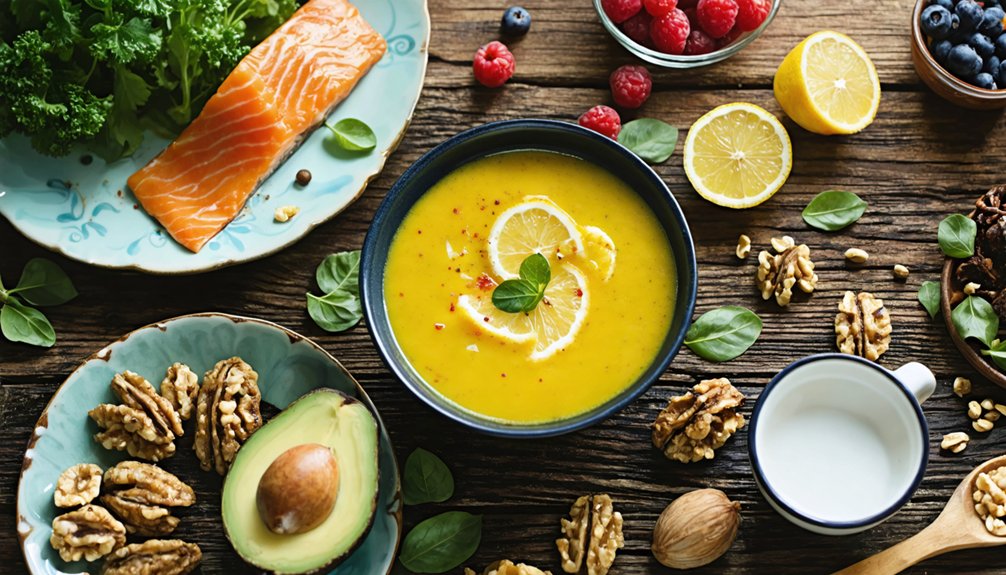

You can lower chronic inflammation and feel better by choosing anti-inflammatory foods that change your gut, blood markers, and cellular signaling. Eating berries, leafy greens, nuts, olive oil, legumes, and fatty fish boosts beneficial microbes, raises short‑chain fatty acids, and reduces cytokines and oxidative stress. Those shifts improve blood lipids, blood pressure, insulin sensitivity, and joint pain while aiding weight control. Follow practical meal patterns and you’ll see measurable health gains — keep going to learn specifics.
Key Takeaways
- Anti-inflammatory foods reduce chronic systemic inflammation by lowering pro-inflammatory cytokines and oxidative stress, improving overall cellular health.
- Fiber-rich plants and polyphenols reshape the gut microbiome, increase SCFAs (butyrate), and strengthen intestinal barrier integrity.
- Omega-3s from fatty fish and ALA sources improve lipid profiles, reduce triglycerides, and enhance insulin sensitivity.
- Monounsaturated fats (olive oil, avocado) and nuts lower LDL oxidation and support favorable vascular function and blood pressure.
- Regular intake of fruits, vegetables, legumes, and whole grains aids weight control and reduces cardiometabolic risk and long-term mortality.
The Science Behind Dietary Inflammation and Health
Because what you eat directly shapes your internal environment, dietary patterns powerfully steer inflammation through measurable biological mechanisms.
You’ll find processed foods shift your gut microbiome, raise intestinal permeability, and let bacterial components enter circulation, fueling chronic inflammation.
High refined-carb loads spike insulin and, over time, drive metabolic dysfunction.
Excess omega-6s and ultra-processed additives promote pro-inflammatory signaling and eicosanoid production.
You can assess this: dietary biomarkers and indices like the Dietary Inflammatory Index and HEI-2015 quantify inflammatory potential and correlate with leukocyte counts, NLR, and clinical outcomes.
Population data show many adults consume pro-inflammatory patterns linked to higher mortality and cardiometabolic risk.
Knowing these mechanisms and biomarker signals helps you choose patterns that reduce systemic inflammation and support communal health goals.
Improving overall diet quality and lowering dietary inflammatory potential are associated with reduced inflammatory markers in large population studies, notably reduced leukocyte counts.
Recent evidence also shows that diets emphasizing omega‑3s, fiber and polyphenol‑rich foods can lower hs‑CRP and IL‑6, key markers of chronic inflammation anti‑inflammatory foods.
A large analysis of over 34,500 adults found that 57% have pro-inflammatory diets.
Key Anti-Inflammatory Foods to Include Daily
With the mechanisms and biomarkers in mind, you can choose foods that actively lower inflammatory signaling and improve measurable outcomes. Aim to include seasonal berries daily for anthocyanins that reduce inflammatory markers; toss them into chia pudding to amplify fiber and ALA benefits. Use extra virgin olive oil liberally—its oleocanthal works like a mild anti-inflammatory—and finish salads and cooked vegetables with it. Make avocado toast a regular ritual: monounsaturated fats, carotenoids, and vitamin E support cellular resilience. Add cruciferous and dark leafy greens for sulforaphane and antioxidants, and eat fatty fish like salmon twice weekly for EPA and DHA. Sprinkle turmeric, ginger, walnuts, and flax or chia seeds to broaden your anti-inflammatory profile and strengthen community-centered meal habits. Recent research shows that diverse plant-based foods supply polyphenols and flavonoids that help counteract oxidative stress. Incorporate omega-3s regularly to support heart health and reduce systemic inflammation. Include a couple of servings of leafy greens daily to maximise vitamin and antioxidant intake.
How Diet Lowers Cardiovascular Risk
When you shift your eating pattern toward whole fruits, vegetables, legumes, nuts, and oily fish, you actively lower the key drivers of heart disease—blood pressure, LDL cholesterol, inflammation, and excess weight—producing measurable risk reductions in just weeks to years.
You’ll see DASH effectiveness in lowering 10-year cardiovascular risk by about 10% within eight weeks, with stronger benefits for women and Black adults.
Embracing plant-forward choices delivers Vegetarian benefits too: vegetarian and vegan patterns cut cardiovascular incidence roughly 15% and reduce ischemic heart disease and mortality markedly.
Higher diet scores associate with substantially lower mortality and cardiovascular events globally.
The evidence comes from controlled feeding trials like DASH that randomized adults to different diets for eight weeks and measured changes in estimated 10-year ASCVD risk, showing significant improvements with the DASH diet.
A comprehensive review-of-reviews led by nutrition researchers also found consistent benefits for plant-based patterns in reducing cardiovascular outcomes, supporting their use in clinical practice for CVD risk reduction.
Long-term trials and meta-analyses further demonstrate durable benefits on weight and lipids with sustained adherence to these patterns network meta-analysis.
Dietary Strategies for Managing Arthritis and Chronic Pain
Although diet won’t replace medications, shifting to an anti-inflammatory pattern can meaningfully reduce joint pain and improve function within months, so you should consider it as a practical adjunct to medical care.
You’ll see evidence: trials show pain reductions exceeding minimal clinically important differences and functional gains in rheumatoid arthritis after Mediterranean-style or low-inflammatory diets.
Focus on consistent dietary adherence—regularly eating fruits, vegetables, legumes, olive oil, nuts, fish, and fiber-rich foods boosts anti-inflammatory effects and supports weight loss, lowering mechanical load on joints.
Supplements like fish oil can reduce stiffness and swelling.
Structured programs with cooking support help you stick with changes and sustain benefits.
Pair dietary shifts with attention to joint biomechanics—movement, load management, and weight control—to maximize pain relief and functional improvement.
Systematic reviews and meta-analyses synthesize results across studies to inform practice and research, emphasizing the need for higher-quality trials to clarify effect sizes and generalizability study synthesis.
Gut Microbiome Benefits From Plant-Rich Eating
By eating more whole plant foods you’ll change your gut community in ways that measurably lower inflammation and support metabolic health.
You’ll boost microbiome resilience: studies show higher alpha diversity and rapid shifts toward fiber-degrading specialists within days, with substantial diversification by 13 months.
Plant-rich patterns raise butyrate-producing taxa (Lachnospiraceae, Faecalibacterium), SCFA output, and beneficial Bifidobacterium and Lactobacillus counts, which strengthen mucosal integrity and reduce inflammatory markers.
Phytonutrient signaling from polyphenol-rich foods accelerates biotransformation and favors anti-pathogenic microbes while cutting harmful metabolites like TMAO.
These changes are dose-responsive and reproducible across vegan and vegetarian cohorts, so when you choose varied whole plants you’re joining a community-backed strategy that tangibly lowers gut-driven inflammation and supports long-term wellness.
Anti-Inflammatory Diets for Metabolic Health and Diabetes
Shifting from how plant-rich patterns reshape the gut, you’ll find that anti-inflammatory diets also deliver measurable benefits for metabolic health and diabetes management.
You’ll see reductions in waist circumference, visceral fat and BMI in clinical trials, plus higher HDL and lower blood pressure when you follow Mediterranean-style patterns.
High-fiber foods and healthy oils slow carbohydrate absorption, cutting glycemic spikes and blood sugar variability, which supports steadier HbA1c and fasting glucose.
Evidence shows reduced inflammatory markers and oxidative stress that drive insulin resistance.
Aim for balanced macronutrients, omega-3s from fatty fish, olive oil and nuts to improve lipid profiles and insulin sensitivity.
Check for medication interactions with concentrated bioactives, and work closely with clinicians as you adapt your plan.
Phytochemicals, Supplements, and Mechanistic Pathways
When you look beyond whole foods to the concentrated compounds they carry, phytochemicals and targeted supplements offer clear, mechanistic routes to dampen inflammation and complement dietary patterns. You’ll find alkaloids, flavonoids, lignans, terpenoids, and α‑linolenic acid that act on NF‑κB, MAPK, STAT, CHOP, and Nrf2 pathways to reduce cytokines, NO, and oxidative stress.
Molecular pharmacognosy explains how apigenin, luteolin, astilbin, and isoflavones modulate signaling and immune cell function. Phytochemical synergy—combining intra‑ and inter‑plant compounds or supplements—improves bioavailability, broadens pathway coverage, and leverages microbiome metabolism for greater anti‑inflammatory metabolites.
Preclinical-to-human dose translations show realistic therapeutic potential, though clinical gaps remain. You’ll benefit most by valuing evidence‑based combinations and consulting clinicians when using concentrated extracts or supplements.
Practical Meal Patterns and Tips for Long-Term Success
Although changing your eating pattern takes planning, you can build an anti-inflammatory routine that fits your life and delivers measurable benefits.
Start with weekly meal prepping that anchors breakfasts and dinners around leafy greens, whole grains (1–2 servings per meal), and 1–2 daily servings of nuts. Schedule ≥2 fatty fish meals weekly and limit red meat to 12–18 oz/week. Use extra-virgin olive oil as your main fat and include legumes once or twice weekly. Eat a salad before mains to boost vegetables and aim for ≥5 combined fruit/veg servings daily. Track shifts with a Dietary Inflammatory Index, shift gradually, and practice mindful snacking with yogurt, fruit, or a small nut portion to sustain adherence.
References
- https://pmc.ncbi.nlm.nih.gov/articles/PMC11576095/
- https://www.frontiersin.org/journals/nutrition/articles/10.3389/fnut.2023.1205526/full
- https://www.ebsco.com/research-starters/nutrition-and-dietetics/anti-inflammatory-diet
- https://www.ncbi.nlm.nih.gov/books/NBK597377/
- https://nutritionsource.hsph.harvard.edu/healthy-weight/diet-reviews/anti-inflammatory-diet/
- https://www.medicalnewstoday.com/articles/do-anti-inflammatory-diets-really-work
- https://www.arthritis.org/health-wellness/healthy-living/nutrition/anti-inflammatory/anti-inflammatory-diet
- https://www.frontiersin.org/journals/immunology/articles/10.3389/fimmu.2025.1596806/full
- https://cph.osu.edu/news/2024/10/study-highlights-pervasiveness-inflammation-american-diet
- https://www.uchicagomedicine.org/forefront/gastrointestinal-articles/2020/september/what-foods-cause-or-reduce-inflammation