
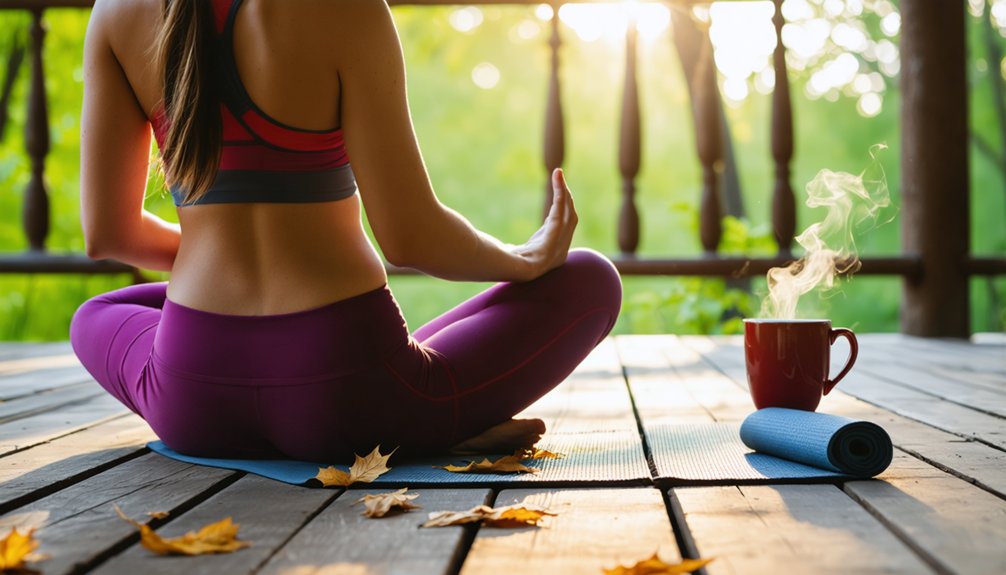

Gentle mobility workouts calm your nervous system by combining slow, rhythmic movement, diaphragmatic breathing, and targeted stretches that boost vagal tone and lower cortisol. Short sessions release endorphins, ease neck‑and‑shoulder tension, improve HRV, and restore proprioceptive feedback so you feel steadier and more focused. Daily 5–15 minute practices shift you into parasympathetic states, improve sleep, and build resilience over weeks. Keep going and you’ll find practical routines, breath cues, and easy progressions to follow.
Key Takeaways
- Gentle mobility pairs slow, diaphragmatic breathing with movement to activate the vagus nerve and shift toward parasympathetic calm.
- Low‑intensity rhythmic movements (rocking, swaying, brief walks) lower cortisol and boost endorphins and serotonin within minutes to hours.
- Short daily sessions (5–15 minutes) improve HRV and neuroplasticity, strengthening stress resilience over weeks.
- Proprioceptive input from mindful stretches and light resistance signals safety, reducing muscle guarding and sympathetic arousal.
- Movement-as-meditation—attention on breath and sensation—redirects rumination to sensorimotor circuits, enhancing focus and lowering anxiety.
The Science Behind Movement and Stress Reduction
Because movement engages multiple physiological systems at once, gentle mobility work becomes a powerful, science-backed method for lowering stress. You tap neurochemical pathways that boost beta-endorphin and serotonin, lifting mood and blunting pain signals while lowering cortisol. Regular stretching and low-intensity aerobic moves stabilize glucose and reduce stress-hormone secretion, with trials showing measurable cortisol declines over months. You’ll notice brainwave modulation too: yoga and restorative practices raise alpha and theta, reduce beta, and increase gamma coherence, improving emotional regulation and neural synchrony. Muscle tension falls as EMG studies confirm reduced neuromuscular complexity, and ten-minute protocols reliably ease tightness. This integrated response gives you a clear, evidence-based toolset for feeling more resilient, calm, and connected. In clinical settings, individualized programs created by exercise professionals further enhance outcomes by addressing specific impairments and movement patterns personalized assessment. Recent reviews also highlight that consistent practice produces measurable autonomic changes such as increased HRV reflecting improved parasympathetic tone increased HRV. Regular sessions of at least 30 minutes are associated with greater stress reduction in population studies 30 minutes daily.
How Gentle Mobility Activates the Parasympathetic Nervous System
Having seen how movement shifts hormones and brain rhythms, let’s look at how gentle mobility specifically turns on your parasympathetic nervous system.
You’ll notice rhythmic rocking, swaying, and crawling patterns engage vestibular regulation, sending predictable sensory input that calms brainstem circuits and invites vagal activation.
When you combine diaphragmatic breathing and humming with slow transitions, you directly stimulate vagus nerve pathways and boost vagal tone. These practices are supported by research showing that structured breath and vocal techniques increase heart rate variability and parasympathetic activity through diaphragmatic & slow breathing.
Proprioceptive signaling from wall push-ups, resistance-band pulls, or mindful pressure activates deep receptors that signal safety, releasing acetylcholine and lowering arousal.
These coordinated, nonforceful movements guide you down the polyvagal ladder from immobilization or hyperarousal into rest-and-digest.
Practiced together, they form an inclusive, reliable toolkit that helps your nervous system recognize safety and settle more quickly. Regular practice also strengthens the body’s ability to return to calm by increasing vagal tone.
This kind of regular practice supports measurable benefits like improved heart rate variability and digestion by enhancing parasympathetic activity.
Muscle Tension Relief: Targeting Neck, Shoulders, and Back
When stress tightens your neck, shoulders, and back, targeted gentle mobility can quickly break the cycle of muscle guarding and pain-anxiety escalation by restoring circulation, improving breathing, and retraining more efficient movement patterns. You’ll start with a simple postural assessment to identify forward head posture and upper cross patterns that sustain trapezius overactivity. Short daily protocols—chair yoga, doorway pectoral stretches, and supine neck rotations with diaphragmatic breathing—reduce thoracic rigidity and restore blood flow. Use focused trigger point release and progressive relaxation to lower EMG-measured muscle contraction and prevent guarding. Consistent 5–15 minute sessions change neuromuscular recruitment, raise activation thresholds of stabilizers, and lower cortisol and inflammatory markers. You’ll feel clearer, calmer, and reliably supported by a practiced routine. Regular movement also trains the nervous system to be less reactive to stress by serving as a natural regulator. Exercise also improves mood and resilience by increasing central monoamines and endorphins, supporting stress reduction. Adding brief aerobic activity several times a week can further enhance these effects by boosting mood and energy.
Movement as Meditation: Enhancing Mental Focus and Clarity
If you anchor attention in slow, deliberate movement—syncing breath with each motion—you’ll sharpen focus and clear mental clutter as effectively as seated meditation. You cultivate focused attention through sensory anchoring: breath, proprioception, and rhythmic motion redirect neural resources from ruminative networks to sensorimotor and prefrontal circuits. Studies show increased frontal alpha, beta, and theta activity during Tai Chi/Qigong, linking relaxation with alertness and faster visual attention. Within minutes, coordinated inhale–exhale cycles and diaphragmatic breathing boost parasympathetic tone and cerebral blood flow, improving clarity. Regular practice produces neuroplastic changes that strengthen executive control and sustain cognitive gains over months. When you practice movement as meditation, you join a community of learners refining attention, reducing intrusive thoughts, and enhancing decision-making with quiet, embodied focus. Short, frequent sessions such as short walks throughout the day also raise mood and improve focus.
Emotional Benefits: Mood, Confidence, and Sleep Improvements
Shifting attention from mental focus to how your body feels, gentle mobility work also produces powerful emotional benefits that show up as better mood, steadier confidence, and deeper sleep.
You get an endorphin boost from consistent, low-intensity movement that eases pain signals and lifts mood; serotonin rises with regular stretching, stabilizing emotional swings.
As your balance and functional mobility improve, so does your self-assurance—enhanced proprioceptive awareness lets you move with intention and less fear of injury.
Evening mobility routines lower cortisol and interrupt muscle-tension cycles, helping you fall asleep faster and reach restorative stages more consistently.
Clinical and EEG data support these effects: better autonomic regulation, increased alpha and delta activity, and measurable reductions in anxiety and sleep disturbances.
Practical Routines: Short, Frequent Sessions That Work
Regularly, keep sessions short and frequent—ten minutes a day or a few brief bouts spread through your day will deliver measurable stress relief and mobility gains.
You’ll use micro routines and habit stacking to weave movement into real life: morning and evening seven-minute practices, commute-integrated mobility, or three daily ten-minute slots that cut workplace stress.
Short bouts (15–60 seconds per stretch) boost blood flow; ten-minute minimums activate parasympathetic responses and lower cortisol.
Consistent frequency—daily or five weekly sessions—builds range of motion and heart-rate variability while preventing plateaus.
Start simple, progress duration or complexity gradually, and pair sessions with existing cues to reach high adherence.
You’ll belong to a practical, evidence-based approach that reduces tension and improves focus.
Accessible Modalities: Chair Yoga, Walking, and Water-Based Options
Accessible modalities like chair yoga, walking, and water-based exercise give you practical, low-risk ways to reduce stress and improve mobility across ages and abilities.
Chair yoga studies show meaningful anxiety and depression reductions, quick drops in perceived stress, and safe delivery for frail or cognitively impaired participants; short sessions—even 15 minutes—or remote classes maintain high adherence and remove transportation barriers, supporting community access.
Walking offers low-cost, scalable movement that builds confidence and social connection.
Water-based options reduce joint load, let you move with adaptive equipment when needed, and foster inclusive group settings.
You’ll get measurable mood and physiological benefits while feeling seen and supported by programs designed for varied abilities and realistic daily life.
Breathing and Movement: Techniques to Maximize Nervous System Regulation
When you pair breath with gentle movement, you directly engage the vagus nerve and steer the autonomic nervous system toward parasympathetic dominance—lowering heart rate, reducing cortisol, and improving heart rate variability within minutes.
You’ll use diaphragmatic pacing—slow 5–6 second cycles and extended exhales—to activate mechanoreceptors and synchronize HRV, moving you out of fight-or-flight.
Combine paced breathing with gentle arm or spine mobility to amplify proprioceptive safety signals.
Practice 4-7-8 or box breathing for steady-state calm; try the physiological sigh when acute tension spikes.
Add vocal toning or humming on the exhale to stimulate auricular vagal pathways and speed cortisol reduction.
Consistent short sessions build vagal tone, increase resilience, and let you belong to a calmer, more regulated body.
References
- https://www.pritikin.com/your-health/healthy-living/gentle-workouts-that-accelerate-healing-and-improve-mobility.html
- https://www.calm.com/blog/simple-movement-exercises
- https://www.mayoclinic.org/healthy-lifestyle/stress-management/in-depth/exercise-and-stress/art-20044469
- https://www.bannerhealth.com/healthcareblog/advise-me/the-key-benefits-of-flexibility-and-mobility
- https://www.research.colostate.edu/healthyagingcenter/2021/06/23/the-simple-act-of-stretching/
- https://www.helpguide.org/wellness/fitness/the-mental-health-benefits-of-exercise
- https://health.ucdavis.edu/blog/cultivating-health/how-to-improve-your-stretching-and-flexibility-for-better-health/2024/10
- https://www.nia.nih.gov/health/exercise-and-physical-activity/health-benefits-exercise-and-physical-activity
- https://pmc.ncbi.nlm.nih.gov/articles/PMC10919405/
- https://www.stress.org/news/relaxing-stretches-that-help-fight-stress/