
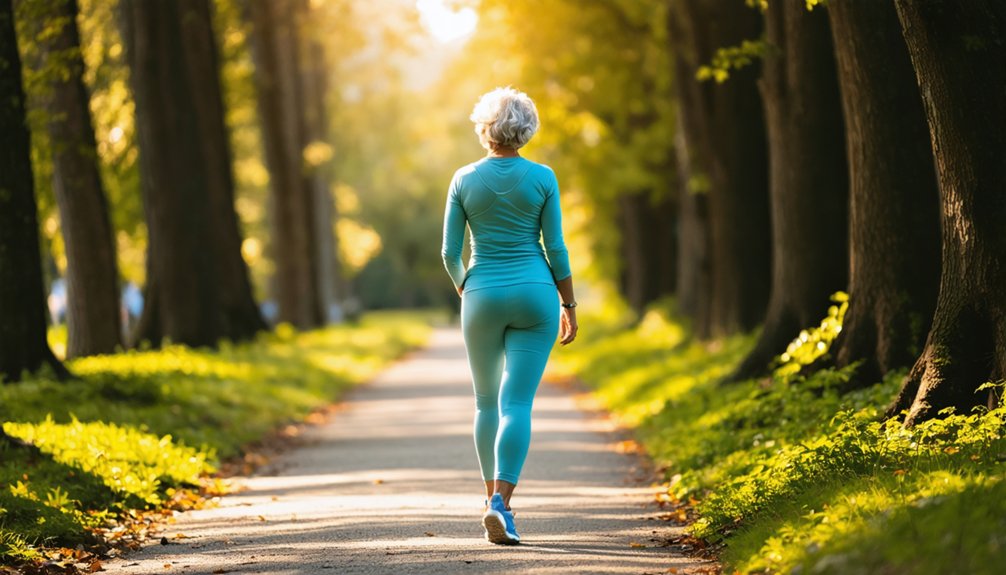

You can add years to your life and protect your brain, heart, and cells by shifting sedentary time into light, regular movement like standing breaks, short walks, or household tasks. These actions lower blood pressure, improve sleep and glucose control, reduce inflammation, preserve mitochondria and telomeres, and cut early-death risk—especially when done daily or paired with brisk bouts. They’re safe, scalable, and amplify benefits when combined with moderate exercise; keep going to learn practical ways to start.
Key Takeaways
- Regular light activity (walking, household tasks) lowers blood pressure, improves sleep, and reduces dementia and cardiovascular risk.
- Replacing sitting with 30 minutes of light movement cuts early-death risk by about 17% and improves glucose control.
- Short continuous walks (10–15 minutes) boost cardiovascular fitness, gait, and balance more than fragmented under-5-minute steps.
- Activity enhances mitochondrial quality, antioxidant defenses, and reduces inflammation, delaying cellular senescence and chronic disease.
- Mixed-intensity routines plus brief hourly standing/walking breaks are feasible, inclusive, and multiply survival and functional benefits.
Why Light Activity Matters for Healthy Aging
Because small shifts in daily movement add up, embracing light activity can meaningfully boost healthy aging. You’ll lower blood pressure, improve sleep, and cut dementia risk by adding standing, walking, or household tasks—changes tied to higher odds of healthy aging in long-term studies. Light movement protects cells too, slowing senescence and improving mitochondrial function, which delays chronic disease onset. You won’t need special gear; these activities’re safe, feasible, and inclusive, so everyone can join and feel belonging while staying active. Swap sitting for light activity at work or coordinate social engagement around walks to strengthen community ties. Pair movement with smart nutritional timing to optimize energy and sleep, making sustained, evidence-based change both practical and powerful. Recent large cohort data show that reducing television time and replacing it with light-intensity activity is associated with higher odds of healthy aging. A prominent study of older adults found that limiting TV to three hours or less per day and adding movement predicted a substantial increase in healthy aging odds, highlighting sedentary behavior as a key target. Walking briskly for about 30 minutes most days is associated with substantial reductions in cardiovascular risk, supporting brisk walking.
Sedentary Time vs. Light Movement: The Trade-Off
You’ve seen how small increases in light activity improve aging markers, so let’s look at how those minutes stack up against sitting.
You’ll find replacing 30 minutes of daily sitting with light activity links to a 17% lower early-death risk, while moderate-to-vigorous swaps show larger gains.
Even one-minute bursts help, and accumulating over 3.5 hours of movement seems to erase sitting-related mortality risk.
Sedentary time worsens glucose, blood pressure, muscle and bone health; light movement counters those mechanisms without intense effort.
Practical sitting alternatives—standing breaks, brief walks, household tasks—boost function and lower BMI associations tied to prolonged TV time.
Don’t buy movement myths that only long workouts count; regular light activity adds up and protects you.
Recent research in older adults shows that replacing sedentary time with higher-light intensity activities is associated with lower BMI and, in men, greater grip strength, suggesting light-intensity activity can be an accessible target for improving body composition and muscle function.
This study analyzed wearable-tracker data from nearly 8,000 adults over 45, showing that replacing sitting with movement was linked to longer life expectancy.
A main analysis found that substituting sedentary time with 30 minutes of light activity was associated with a 17% lower mortality risk.
How Walking Boosts Longevity and Function
Start lacing up and you’ll see how walking — a simple, accessible habit — powerfully shifts longevity and function through dose, duration, intensity and regularity.
You’ll gain years by moving: 15 minutes brisk daily links to substantial mortality reduction, while 160 minutes at ~3 mph models add 5+ years.
Favor continuous 10–15 minute bouts to strengthen cardiovascular fitness and gait mechanics; fragmented under-5-minute steps don’t confer the same protection.
Brisk pace improves metabolic control and cuts cardiovascular and respiratory mortality more than slow, prolonged strolls.
Consistent walking builds neural resilience, supporting balance, reaction time and independence as you age.
Start with attainable goals — 4,400 steps or 15 minutes daily — then progress steadily, knowing you belong to a community choosing longevity.
Adding modest increases toward the activity level of the most active quartile can meaningfully extend life expectancy by several years 160 minutes/day.
A recent large analysis found that adults taking longer continuous walks had lower risk of cardiovascular events and death over about 10 years, especially when walking in bouts of 10–15 minutes. A modeled estimate suggests that if middle-aged adults matched the activity of the most active quartile they could gain about five years of life.
Workplace Light Activity: Small Changes, Big Gains
Bring movement into your workday and you’ll tap a surprisingly powerful lever for health: swapping brief bouts of sitting for light activity can cut mortality risk, boost sleep and mood, and improve metabolic function.
You can start small: take short walking breaks, use distant restrooms, or choose communal stairways instead of elevators. If your workspace has natural lighting, you’ll likely see measurable gains — more daytime light links to better sleep (about 46 extra minutes), higher activity, and improved metabolic markers. Employees with windows received substantially more light during the workday, which correlates with these benefits.
Multicomponent programs and environmental tweaks raise workplace activity substantially; studies show low-intensity work movement doesn’t reduce leisure activity, so gains stick.
For older or least-active colleagues, these modest changes deliver disproportionate longevity and quality-of-life benefits while fostering supportive, shared routines.
Replacing TV Time With Active Choices
Cutting back on TV time is one of the simplest, evidence-backed moves you can make to improve long-term health: swapping just one hour of daily television for light activity boosts the odds of healthy aging by about 6%, and switching that hour to moderate-to-vigorous exercise raises the benefit to roughly 28%.
You can start by trading an evening episode for a brisk walk, household chores, or a screen‑no‑cost hobby that engages you. Those shifts lower sedentary time linked to poorer aging outcomes and higher BMI. Join community programs or walking groups to stay motivated and belong while you move.
If you’re less active now, substituting TV with any movement yields especially large gains in longevity.
The Biology Behind Light Exercise Benefits
Dig into the biology and you’ll see why light exercise reliably protects against age-related decline: it preserves chromosome integrity by maintaining telomeres and boosting telomerase activity, strengthens mitochondrial function through biogenesis and AMPK-driven remodeling, dampens chronic inflammation via reduced IL-1β/IL-18 and NLRP3 modulation, and enhances cellular stress resistance by tuning AMPK, mTOR, insulin/IGF‑1, and sirtuin pathways.
You’ll find exercise upregulates DNA repair proteins and lowers p53-driven senescence, supporting muscle regeneration and longer telomeres.
Light activity triggers mitochondrial remodeling and biogenesis, prevents mtDNA damage, and transient fragmentation resolves within a day.
Simultaneously, EcSOD and antioxidant defenses rise while IL-1β/IL-18 decrease, improving immune function.
These coordinated changes build cellular resilience, so you and your community gain tangible, evidence-based protection as you move regularly.
Combining Light With Moderate and Vigorous Activity
When you combine light activity with moderate and vigorous exercise, you get complementary benefits that multiply survival advantages: light movement preserves daily function and cardiorespiratory reserve, while moderate and vigorous bouts drive the largest reductions in all‑cause and cardiovascular mortality.
You should aim for a balanced weekly profile — roughly 150–225 minutes moderate plus 10–75 minutes vigorous and muscle‑strengthening twice weekly — to approach maximal mortality reduction.
If you’re below recommendations, adding 75–150 minutes vigorous or 150–300 minutes moderate yields substantial gains.
Use interval training to boost vigorous dose efficiently and schedule active recovery sessions to protect function and adherence.
This combination serves diverse populations, cuts cardiovascular risk, and fosters shared commitment to long-term health.
Practical Ways to Add Light Movement Daily
Adding small amounts of light movement into your day can meaningfully boost healthy aging and metabolic health, and you don’t need a gym to do it.
Start with micro-movement: stand and walk 2–3 minutes each hour to counter prolonged sitting and improve glucose metabolism. Swap one TV hour for a light activity or take meal strolls after eating to aid sleep and reduce disease risk.
At work, build posture changes and brief walks into meetings; replacing sedentary tasks with light activity raises odds of healthy aging. Use stair swaps instead of elevators several times daily to raise daily activity accumulation.
These practical, evidence-backed habits—short breaks, walking doses, and workplace tweaks—help you belong to a healthier daily rhythm.
References
- https://jamanetwork.com/journals/jamanetworkopen/fullarticle/2819832
- https://hsph.harvard.edu/news/exercising-more-than-recommended-could-lengthen-life-study-suggests/
- https://pmc.ncbi.nlm.nih.gov/articles/PMC3395188/
- https://www.ama-assn.org/public-health/prevention-wellness/massive-study-uncovers-how-much-exercise-needed-live-longer
- https://pmc.ncbi.nlm.nih.gov/articles/PMC10643563/
- https://academic.oup.com/aje/article/151/3/293/113585
- https://joslin.org/news-stories/all-news-stories/news/2023/01/researchers-shed-light-how-exercise-preserves-physical-fitness-during-aging
- https://journals.plos.org/plosmedicine/article?id=10.1371/journal.pmed.1001335
- https://www.nhlbi.nih.gov/news/2024/increases-everyday-movement-linked-healthy-aging
- https://health.ucsd.edu/news/press-releases/2020-10-12-studies-find-even-minimal-physical-activity-measurably-boosts-health/