
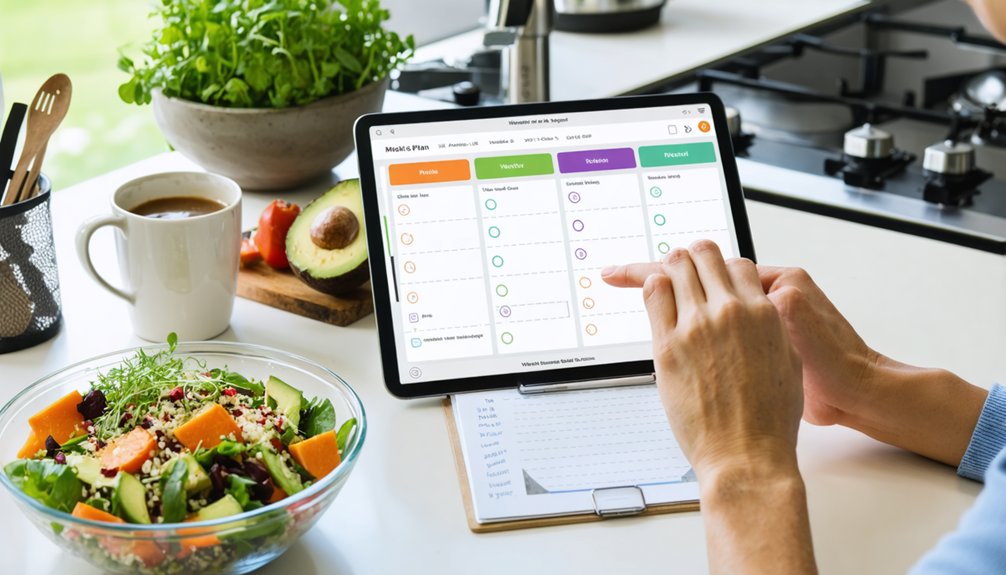

You’re seeing personalized meal coaching surge because AI, wearables, and biomarkers now let programs tailor plans to your biology, schedule, and tastes, yielding faster weight, glucose, and cardiovascular benefits than generic diets. Hybrid models that pair 24/7 AI planning with human coaches boost adherence, accountability, and cultural fit. Employers, gyms, and subscription apps are scaling offerings as validatable outcomes and clear pricing drive adoption. Keep going and you’ll uncover how tech, trials, and business models make it work.
Key Takeaways
- Rising chronic disease rates and busy consumers drive demand for personalized meal coaching as scalable, preventive healthcare and lifestyle support.
- AI, wearables, and multi-omic data enable hyper-personalized, adaptive meal plans tailored to biology, preferences, and real-time responses.
- Hybrid models combining AI automation with human coaches produce better adherence, retention, and weight-loss outcomes than AI-only services.
- Subscription mobile apps, B2B partnerships (gyms, employers), and delivery integrations create recurring revenue and frictionless user experiences.
- Evidence-driven measurement (biomarkers, dietary adherence scores, clinical outcomes) and transparent pricing build trust and accelerate adoption.
Why Personalized Meal Coaching Is Booming Now
Given rising rates of obesity, diabetes and heart disease, personalized meal coaching isn’t just trendy—it’s a practical response to clear public-health needs.
You see data showing billions affected by overweight and chronic illness, and services are scaling to meet that demand with disease-specific clinical nutrition and preventive strategies.
You want solutions that respect your time scarcity, so subscription models and mobile apps deliver tailored plans without constant effort.
Coaches integrate behavior change, metabolic markers and even mental health support so nutrition addresses physical and emotional drivers.
Regional adoption and robust growth metrics—double-digit CAGRs and major investments—prove this isn’t a niche. The market was valued at USD 1.34 Billion in 2025, underscoring rapid commercial expansion.
When you join a coached program, you’re entering a community built on evidence, accessibility and shared goals. The sector is forecast to expand rapidly driven by advances in AI and wearables, reflecting a projected 17.9% CAGR. Also, industry estimates indicate a global market projection of USD 8.8B by 2032.
How AI and Data Are Transforming Meal Planning
Because AI and rich data streams now feed into meal planning engines, you get recommendations that adapt to your biology, schedule and cultural preferences rather than generic calorie counts. You benefit from deep generative models and systems like DeepSeek-R1 plus conversational agents that craft AI recipes tailored to your BMI, blood sugar, DNA markers and lifestyle. Computer vision reads meal photos, wearables supply real-time biometrics, and hybrid algorithms hit 92.4% nutritional alignment while analyzing 176,206+ recipes and 563 tags. Adoption is rapid — mobile apps lead and daily users top millions — yet you should weigh Privacy concerns: DNA and health integration raise consent and data security issues. Still, evidence shows measurable health gains when you use these tools responsibly. These platforms also perform best when fed accurate user data. Recent research demonstrates that combining generative models with large meal databases and guideline-aware optimization can improve recommendation trustworthiness by aligning outputs with nutritional guidelines. AI meal platforms increasingly integrate with wearables and delivery services to automate shopping and cooking prep, improving convenience and adherence to plans while reducing waste supply chain.
Clinical Applications: Managing Chronic Conditions With Nutrition
When clinicians integrate personalized nutrition into chronic care, you see measurable improvements in metabolic control, symptom burden, and medication needs that standard, one-size-fits-all diets rarely achieve.
You’ll apply evidence-driven clinical protocols that translate genetic, inflammatory, and lifestyle data into targeted meal plans; studies report dramatic HOMA-IR reductions and higher adherence when interventions match metabolic profiles. Recent proceedings highlight the need to consider broader system factors when implementing precision approaches to avoid widening disparities equity concerns. Integrating multi-omic insights into care pathways helps tailor interventions to individual biological variability and real-world contexts multi-omic data.
You’ll address nutrient interactions — for example sodium and omega-3 impacts — to lower cardiovascular and insulin-resistance risk while tailoring inflammation-focused choices around markers like TNFα. Molecular nutrition provides the mechanistic basis for these targeted interventions.
Culturally concordant guidance builds trust and boosts long-term adherence, so you and your patients form a collaborative team.
Integrated workflows let you reduce meds, improve biomarkers, and sustain behavioral change across diverse communities.
From Genetic to Gut Microbiome: Integrating Biomarkers Into Plans
Although genetic variants lay the groundwork for individual nutrient responses, integrating gut microbiome profiles and other omics shifts personalized meal coaching from probabilistic to actionable, evidence-driven care.
You’ll use nutrigenomic scoring to quantify SNP-linked metabolic tendencies, then layer microbiome stratification to predict postprandial responses and tailor fiber, prebiotic, and polyphenol targets.
Machine-learning models combine your blood markers, metabolomics, and dietary patterns to translate multi-omics signals into precise meal plans. Genomic variation
Clinical trials linking microbiome composition to glycemic variability justify interventions you can trust.
This approach keeps you central: coaches and platforms synthesize genomic risk scores with real-time microbiome data so recommendations align with your biology and lifestyle.
The result is inclusive, measurable, and clinically grounded nutrition guidance.
The Role of Human Coaches in a Tech-Driven Landscape
As AI systems scale personalized recommendations, human coaches remain the decisive factor that turns data into durable behavior change: studies show hybrid AI+human programs produce substantially greater weight loss, higher retention, and more consistent self-monitoring than AI-only approaches.
You’ll find that combining algorithmic daily feedback with human empathy yields clinically significant outcomes—about 5 pounds average loss in three months and measurable BMI reductions across large cohorts. Coaches boost food-logging frequency, steady weight checks, and bolder goal-setting through accountability frameworks and scheduled checkpoints.
They also address psychological barriers, adapt culturally sensitive plans, and foster trust so you’ll stick with changes long term.
In practice, AI handles routine monitoring while certified coaches intervene on motivation, complex nutrition decisions, and sustained behavior maintenance.
Business Models and Market Opportunities for Startups
Because market signals favor personalization at scale, startups that stitch together AI meal planning, human coaching, and strategic partnerships can capture rapidly growing revenue pools across multiple segments. You can leverage clear market tailwinds — multi-billion forecasts for AI meal plans, personalized nutrition, and nutrition apps — to justify subscription tiers that secure recurring revenue.
Target fitness and personal nutrition segments first, and expand into employer-sponsored programs and APAC where growth is fastest. Combine hybrid tele-nutrition, genetic testing premium upsells, and wearable integration for continuous, personalized feedback that partners like gyms will value.
Focus partnerships, pricing clarity, and measurable outcomes to build trust and belonging among users and corporate clients; that evidence-driven approach accelerates sustainable scaling.
Designing for Real Life: Adherence, Behavior Change, and UX
To make personalized meal coaching work in real life, you need designs that prioritize sustained adherence, measurable behavior change, and seamless user experience.
You’ll measure adherence objectively—concordance between choices and recommendations, DDS or CDGI-E at baseline, 3 and 6 months—and track clinically meaningful shifts (e.g., 1.56-point DASH).
Expect attrition and plan samples accordingly.
Improve behavioral fidelity by combining counseling, in-store education, and AI meal planners that respect restrictions and preferences; combined approaches raised DASH by 3.8 points.
Address contextual barriers—time, cooking skills, social support—through practical training, grocery sessions, and flexible planning.
Assess perceived acceptability, usability, and secondary clinical outcomes (BP, LDL, BMI).
Design integrates multiple components to boost real-world uptake and community-centered belonging.
Emerging Trends Shaping the Future of Meal Coaching
When you build the next generation of meal coaching, expect AI, genomics, and real‑time data to reshape what personalization actually means: conversational LLMs and meal‑plan generators will give clients rapid, context‑aware recommendations, wearables will feed continuous feedback loops, and nutrigenomics plus lifestyle sensors will let coaches tailor interventions to biology and daily routines.
You’ll leverage AI-driven meal planning—projected market growth confirms scalability—to deliver macro-aligned, minute‑fast plans and 24/7 virtual support.
Real-time wearable data and gut‑brain insights let you adjust plans based on actual responses.
Sensory personalization improves adherence by matching flavors and textures, while sustainable sourcing answers shared values and reduces environmental impact.
This evidence-driven mix boosts outcomes, fosters community trust, and positions your service for widespread consumer adoption.
References
- https://www.globenewswire.com/news-release/2025/10/14/3166321/0/en/AI-Generated-Meal-Plan-Market-Projected-to-Reach-USD-5-37-Billion-by-2033-Amid-Rising-Demand-for-Personalized-Nutrition-Report-by-SNS-Insider.html
- https://www.towardsfnb.com/insights/ai-in-personalized-nutrition-market
- https://www.grandviewresearch.com/industry-analysis/personalized-nutrition-platform-market-report
- https://www.precedenceresearch.com/personalized-nutrition-market
- https://www.statista.com/statistics/1201697/personalized-nutrition-market-size-worldwide/
- http://blog.everfit.io/everfit-july-2025-updates
- https://www.lark.com/resources/why-personalized-meal-coaching-is-the-future-of-employee-health-and-wellness
- https://pmc.ncbi.nlm.nih.gov/articles/PMC10436119/
- https://www.coachhub.com/blog/5-trends-in-wellness-coaching-for-2025
- https://www.marketresearch.com/Stratistics-Market-Research-Consulting-v4058/AI-Nutrition-Coaching-Platforms-Forecasts-42784919/