

You can use well-timed, nutrient-dense snacks to steady energy, mood, and blood sugar while preventing overeating and cravings. Space snacks about 4–5 hours, include morning protein to sustain you, and pick whole foods like Greek yogurt, fruit, nuts, or hummus with veggies. Aim for ~200 kcal with 10–20 g protein, fiber, and some healthy fat. Pre-portion and eat mindfully to avoid impulse bites — keep going to get practical combos and timing tips.
Key Takeaways
- Time snacks about every 4–5 hours, aligning with mid-morning and mid-afternoon energy dips to stabilize blood sugar.
- Choose nutrient-dense whole foods (yogurt, fruit, nuts, whole grains) over processed, sugar-rich packaged snacks.
- Balance each snack with protein, fiber, and a small amount of healthy fat to prolong fullness and blunt glucose spikes.
- Pre-portion snacks, eat without distractions, and store healthier options at eye level to prevent mindless overeating.
- Customize snack size (~200 kcal, 5–25 g protein when needed) to activity level and recovery goals for sustainable habits.
Why Timing Your Snacks Matters for Energy and Mood
Because your brain runs on a steady supply of glucose, timing your snacks matters for both energy and mood: well-timed, balanced snacks keep blood sugar stable, reduce irritability and concentration lapses, and prevent the cortisol-driven stress responses that follow dramatic dips.
You’ll protect glucose stability by spacing intake roughly every four to five hours and by avoiding snacks too close to main meals, which can cause surges and crashes.
Practice circadian snacking—aligning snacks with mid-morning and mid-afternoon energy dips—to fit your natural rhythms and improve metabolic responses shown in population studies. Population studies Regular breakfast consumption is linked to lower stress markers.
If you skip morning eating, you’ll likely shift intake later and increase late-night snacking, undermining mood and glucose control.
Consistent timing retrains hunger cues within weeks. Also, aim to include protein at breakfast to maintain energy until lunch, which supports consistent meal timing.
What Makes a Snack Truly Nutrient-Dense
Clarity about nutrient density helps you choose snacks that deliver the most vitamins, minerals, fiber and protein for the calories they provide. You should favor foods with high NRF scores—yogurt, milk, fruits and leafy greens—because they pack essential vitamins, minerals and phytochemicals per 100 kcal. Look for snacks that combine nutrients to encourage and minimize sodium, saturated fat and added sugar; snacks scoring ≥10 meet useful thresholds. Consider micronutrient bioavailability: calcium or iron matter only if your body can absorb them, so pairings and food form count. Antioxidant synergy in fruits, vegetables and dairy-rich snacks amplifies benefits beyond single compounds. Use validated metrics like NRF and PFV to compare options and feel confident your choices support health without sacrificing community or shared eating. Yogurt and milk consistently rank among the top snack options by nutrient density, with high NRF scores demonstrating their favorable nutrient-to-calorie ratios. New research shows that powerhouse fruits are often the most nutrient-dense choices per calorie. Choosing a variety of whole foods, rather than processed snacks, helps increase overall nutrient density.
Balancing Protein, Fiber, and Carbohydrates for Lasting Fullness
Think of a smart snack as a mini meal engineered to keep you steady: pairing protein, fiber and the right carbs blunts blood-sugar spikes, prolongs fullness, and prevents the mid-afternoon crash.
You’ll use protein pacing to space 5–25g per snack depending on needs — that prevents muscle loss and sustains peptide YY release for hours. Protein paired with carbohydrates stabilizes blood sugar levels.
Match 15–20g total carbs with at least 3g fiber to slow glucose release; fiber timing matters because fiber delays gastric emptying 20–30%, extending energy across 90–120 minutes. whole-grain bread
Add 7–10g healthy fat when helpful to lengthen satiety.
Practical combos (Greek yogurt with berries, whole-grain toast and almond butter) follow these templates so you and your community feel supported and confident.
Pairing these snacks with convenient options like hard-boiled eggs makes them easy to implement on busy days.
Smart Portion Control to Prevent Overeating
When you plan snacks with purpose, you cut mindless calories and stay satisfied between meals. Use portion awareness: aim for ~200 calories (up to 300 if active), a 1-ounce nut serving, or a protein portion the size of a hockey puck. Practice plate psychology by using smaller bowls and plates to make portions feel generous while reducing intake. Pre-portion with measuring cups, single-serving containers, or resealable bags so you don’t eat from the package. Choose low-calorie-density options (raw veggies, popcorn with little butter) and fiber-rich snacks to stay full. Eat without distractions, chew thoroughly, and check hunger before reaching for food. Store less healthy options out of sight and place healthier snacks at eye level to support control. Remember that portion control is a key environmental driver of energy intake and can help prevent weight gain.
Simple, Satisfying Snack Pairings to Try Today
Pairings that combine protein, fiber, and healthy fats keep you full longer and stabilize blood sugar, so pick combos you can grab and eat without fuss.
Try cottage cheese with pineapple or Greek yogurt with mixed berries for a savory sweet boost—both give high protein plus vitamins and probiotics.
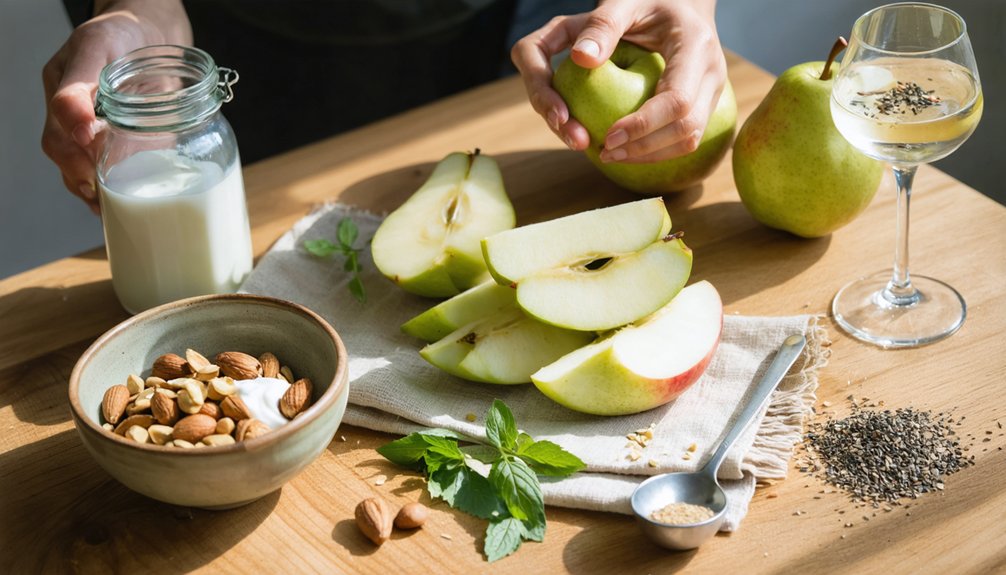
For crunchy creamy contrast, pair apple or pear slices with peanut butter or cheese cubes; you get fiber, fat, and protein that slow sugar absorption.
Keep hummus or guacamole with raw veggies or jicama for prebiotic fiber and monounsaturated fats that aid nutrient uptake.
Rice cakes with almond butter or whole-grain crackers with cheese deliver quick texture satisfaction.
Stock single-serve yogurts, cottage cups, or portioned hummus packs so you always feel supported and ready.
How Snacking Affects Overall Diet Quality and Weight
Those snack pairings you pick do more than curb hunger — they shape overall diet quality and can influence weight over time.
You’ll boost overall diet quality when you favor low energy‑dense, food‑based snacks that increase fruit and dairy intake instead of beverage‑only or ultra‑processed options.
Pay attention to portion timing and snack quality: more frequent low‑energy occasions can improve Healthy Eating Index scores, but large or calorie‑dense snacks raise saturated fat, sodium, and excess calories.
Regular discretionary snacking and ultra‑processed choices shift preferences and can drive weight gain if they push total intake beyond needs.
Practical steps—smaller portions, better timing between meals, and choosing nutrient‑rich snacks—help you support diet quality and reduce the risk of gradual weight increase.
Tailoring Snack Strategies for Children and Active Adults
Because children and active adults have different energy needs, appetites, and environments, you should tailor snack strategies to match those differences. For kids, prioritize kid friendly portions—small, colorful bites, dips, and involvement in prep—to shift home-sourced snacks away from discretionary choices that currently dominate.
Offer balanced combos: fruit with low‑sugar yogurt, apple slices with nut butter, or carrot sticks with hummus to add fiber, healthy fats and protein. For active adults, focus on activity fueled portable protein and timed carbs: Greek yogurt, cottage cheese, nuts, or whole‑grain toast with peanut butter before or after workouts.
After school and post-activity windows are opportunities: schedule nutrient-dense snacks to support recovery and reduce reliance on sugary options. Encourage shared routines so everyone feels supported.
Common Snacking Myths and How to Debunk Them
When you hear blanket claims about snacking, test them against evidence rather than habit or marketing. Don’t assume skipping snacks helps weight loss—skipping often drives overeating at meals and blood sugar crashes; planned, balanced snacks can stabilize energy and curb cravings.
Reject the idea that all snacks are unhealthy: yogurt, nuts, whole grains, and pre-washed produce are nutrient-dense.
Question protein bar claims—compare sugar, additives, and calories; pair bars with fruit or choose whole-food proteins like Greek yogurt.
Understand snacking won’t inherently cause weight gain or ruin appetite when timed and portioned; it prevents impulsive overeating.
Use label reading and practice mindful choices so your snack supports steady glucose, satiety, and a sustainable relationship with food within your community.
References
- https://celiac.org/2024/07/24/the-health-benefits-of-snacking/
- https://nutritionsource.hsph.harvard.edu/snacking/
- https://pmc.ncbi.nlm.nih.gov/articles/PMC10818516/
- https://www.heart.org/en/healthy-living/healthy-eating/add-color/healthy-snacking
- https://healthcare.orgain.com/news/the-science-of-snacking-new-research-and-clinical-implications/
- https://www.health.mil/News/Dvids-Articles/2025/07/16/news542933
- https://nutrition.org/healthy-snacking/
- https://pmc.ncbi.nlm.nih.gov/articles/PMC6628856/
- https://wisemindnutrition.com/blog/breakfast-for-mental-health
- https://www.nm.org/healthbeat/healthy-tips/nutrition/best-times-to-eat