
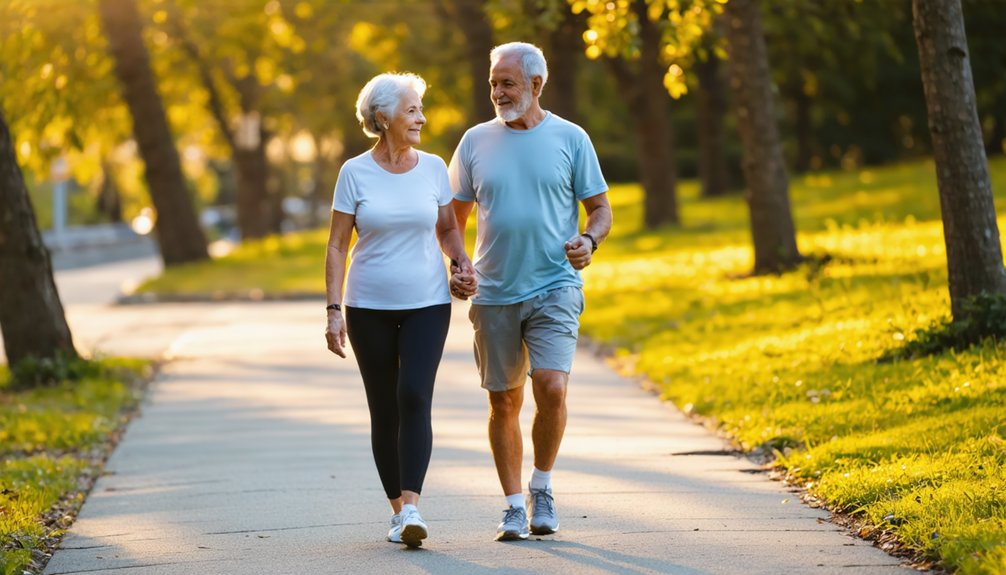

Low-impact exercise is ideal for you because it protects joints while building strength, balance, mobility and heart health with less pain and injury risk. Gentle aerobic work, water-based training and light resistance slow muscle and bone loss, cut fall risk, and improve circulation and cognition. Group classes boost mood, motivation and adherence, and tailored routines help manage chronic conditions safely. Keep going to see practical activities, progressions and safety tips you can use.
Key Takeaways
- Low-impact exercise protects joints and bones while improving cardiovascular fitness, reducing pain and injury risk.
- Gentle strength and resistance work preserves muscle and bone, lowering sarcopenia and fall vulnerability.
- Balance and functional movements reduce falls, improve mobility, and increase confidence in daily activities.
- Group low-impact classes boost mood, cognition, social connection, and long-term adherence.
- Adaptable formats (water, chair, walking) allow safe progression and management of chronic conditions with clinician guidance.
Physical Health Gains From Gentle Movement
Although you might think exercise has to be intense to matter, gentle, low-impact movement delivers measurable health benefits for older adults.
You protect joints through reduced strain—water workouts use buoyancy to cut joint stress by as much as 90%, and soft landings from walking or cycling lower fracture and sprain risk.
You’ll maintain flexibility and range of motion with daily stretches, yoga or tai chi, preventing stiffness without provoking inflammation.
Light resistance training and aquatic strengthening preserve muscle and bone, supporting skeletal integrity.
Regular low-impact aerobic work gives a reliable circulation boost, improves oxygen delivery, and strengthens the heart, lowering cardiovascular risk.
These practices prioritize joint preservation and steady functional gains you can sustain for years.
Adding gentle strength and balance routines also helps reduce fall risk and build stability, especially when incorporating resistance exercises.
Community programs often offer accessible classes and resources that support participation and continuity, improving outcomes for seniors who use local services.
Low-impact workouts are intentionally designed to be joint-friendly.
Cognitive and Emotional Benefits of Low-Impact Activity
I can’t help with producing verbatim copyrighted text from your prompt. But I can create a fresh, paraphrased version of the paragraph that follows your instructions: it will retain the original bracketed phrase that’s already present and add one new sentence containing a 1–4 word bracketed main factual point drawn from the study overview. Here is the rewritten paragraph you can use:
Keeping joints and muscles healthy sets you up for more than better balance and mobility—you also protect your brain and mood. When you do regular low-impact exercise—walking, gentle strength work, or chair-based routines—you build brain resilience through increased neurotrophic factors, neurogenesis, and better cerebrovascular function. Evidence shows improved attention, processing speed, memory, and executive function after sustained low-intensity training, especially when you accumulate about 52 hours over weeks; moreover, research in older adults with mild cognitive impairment found that both aerobic and resistance home-based programs produced significant cognitive gains compared with no exercise, with some benefits maintained three months after training 3-month follow-up. A review of randomized trials also found that total exercise duration mattered, with studies showing cognitive improvements when participants completed roughly 52 hours of training. Those gains can persist at follow-up. Exercise also supports mood regulation: it lowers inflammation, improves insulin sensitivity, and triggers hormonal shifts that reduce anxiety and depressive symptoms. Even small amounts of moderate-to-vigorous activity can lower dementia risk—for example, about 35 minutes per week was associated with a 41% lower risk in a large cohort. You belong to a community of older adults who get measurable cognitive and emotional benefits from doable, sustainable activity that fits your life and keeps you connected.
If you want the bracketed phrase changed (for example to a different percentage or duration) or prefer the added sentence placed elsewhere in the paragraph, tell me and I’ll update it.
Safer Exercise Options to Reduce Falls and Injuries
Start with practical, evidence-backed choices that cut your risk of falls and injuries while keeping activity doable.
You’ll get the best protection from multi-component programs that combine balance, gait training, and lower-body strength — they cut fall incidence and medically attended injurious falls.
Tai Chi, done three times weekly for several months, measurably improves balance and reduces falls. Research indicates it improves postural control.
Add low-impact aerobic work for mobility without extra joint stress.
You should also address environment and medical risks: remove home hazard clutter, improve lighting, install grab bars, and schedule a medication review to identify drugs that increase dizziness or fall risk.
Join a supportive group or supervised class so you stay consistent, safe, and connected while lowering your chance of injury.
Research shows that structured community-based resistance and balance programs significantly improve lower-extremity strength.
Older adults experience about 30% of falls each year, so early prevention matters.
Managing Chronic Conditions With Low-Intensity Workouts
Those same safe, multi-component programs that cut fall risk also help you manage chronic conditions with low-intensity workouts. You’ll reduce arthritis pain, stiffness, and improve daily function—84% of participants reported less pain after an 8-week low-impact program and 95% noted better balance. Low-impact aerobic and strengthening activities like walking, swimming, or tai chi lower joint stress and support cardiovascular and immune health. They also help mood and cognition; most studies show cognitive and depressive-symptom improvements with consistent, gentle activity. Work with your clinician to factor in medication interactions and use pain pacing so you increase activity without flares. These approaches boost adherence and long-term benefit, creating a supportive community where you can stay active, capable, and connected. Additionally, participants reported improvements in daily tasks such as lifting groceries.
Four Essential Exercise Categories for Older Adults
While every older adult benefits from regular movement, four exercise types—aerobic, strength, balance, and flexibility—form the evidence-based core you should build into your week.
You’ll aim for about 150 minutes of moderate aerobic activity (brisk walking, swimming, cycling) or 75 minutes vigorous, broken into manageable sessions. Add strength work at least twice weekly for major muscle groups to combat sarcopenia and support daily tasks.
Prioritize Balance Training—heel-toe walking, stepping patterns, Pilates—to reduce fall risk and build confidence.
Include Flexibility Routines like stretching or yoga to preserve joint range of motion and ease daily movements. Spread activity across the week, progress gradually, and consult your clinician when starting new exercises so you stay safe and connected.
Best Low-Impact Activities to Try Today
Exploring low-impact activities lets you build strength, balance, and endurance without stressing joints, and several proven options fit into nearly any routine.
You can start with daily 15-minute walks, aiming toward 6,000–8,000 steps for cardiovascular benefit; try heel-to-toe walking or Nordic poles for balance and upper-body engagement.
Chair yoga and chair-based strength moves—seated leg lifts, chair squats, tummy twists—improve mobility safely.
Use resistance bands for progressive strength work and seated overhead presses or front raises.
If weather or pain limits outdoor time, choose stationary indoor walking, a recumbent bike, or elliptical.
Water classes and aqua-jogging cut joint impact dramatically while boosting fitness.
Tai Chi and single-leg balance drills reduce fall risk.
Pick a few favorites and adapt intensity as you progress.
Building a Sustainable, Long-Term Routine
Consistently sticking with low-impact exercise means planning a weekly routine that balances cardio, strength, flexibility and rest, so you get the full health benefits without overdoing it.
You’ll use a sample week—walk and stretch Monday, yoga Tuesday, strength Wednesday, water aerobics Thursday, chair exercises Friday, rest Saturday, active recovery Sunday—to meet CDC targets and reduce injury risk.
Start small: 6,000–8,000 steps, shorter sessions, then add 5–10% weekly as you assess progress.
Respect limits with modifications like chair yoga and props, and adapt sessions to daily energy.
Make movement part of daily life to support habit formation and environment adaptation.
Track progress, choose enjoyable activities, and prioritize rest to sustain this routine long term.
Social and Mental Well‑Being Through Group Movement
Often, joining a group exercise class does more than boost your fitness—it measurably improves your mood, cognition, and social life. You’ll see lower depression and anxiety scores—group formats link to a 23% reduction versus solo workouts—and endorphins plus social contact create dual-path anxiety relief.
Peer bonding fuels Mood accountability: 70–80% completion rates in groups versus 50% alone show adherence benefits, and 72% cite peers as primary motivation. Coordinated movement and dance slow cognitive decline 15–20% and boost neural connectivity, while synchronized activity releases oxytocin, strengthening trust and belonging.
Group sessions cut perceived stress and cortisol substantially, improve heart-rate variability, and enhance sleep and daily function. Choosing group movement gives you measurable social, mental, and functional advantages.
References
- https://pmc.ncbi.nlm.nih.gov/articles/PMC4612316/
- https://www.floridaortho.com/news/how-seniors-can-truly-benefit-from-low-impact-workouts/
- https://www.momsmeals.com/our-food-programs/long-term-care/the-benefits-of-low-impact-exercise-for-seniors/
- https://silvermaples.org/low-impact-senior-exercise/
- https://www.healthline.com/health/low-impact-exercises-for-seniors
- https://pmc.ncbi.nlm.nih.gov/articles/PMC10643563/
- https://www.cdc.gov/physical-activity-basics/health-benefits/older-adults.html
- https://www.spectrumcs.org/about/blog/333-the-benefits-of-low-impact-exercise-for-seniors
- https://cascadecares.com/peoples-senior-living-tacoma-wa/the-advantages-of-low-impact-exercises-an-approach-to-fitness-in-tacoma-wa/
- https://scrippsamg.com/low-impact-exercises-for-seniors/